

Benzene Cancer
Overview
Injury: Blood-related cancers caused by benzene exposure
Defendant: Manufacturers, employers, and other companies
Practice: Mass Tort
Latest Update: November 2025 – Benzene litigations continue to gain momentum across the country.
Benzene litigations are gaining momentum across the country as awareness of the hazards of exposure grows. While these lawsuits are not currently consolidated in a multidistrict litigation (a way of grouping many lawsuits against the same defendants), the number of cases filed continues to rise across multiple state courts. Last month, a case filed in the Eastern District of North Carolina alleged that the operators of a chemical plant failed to implement adequate safety measures or warn their employees about the dangers of benzene, and we anticipate that similar cases will be filed in the coming months.
Case Team

PARTNER & CONTACT ATTORNEY
Timothy E. Jackson

CONTACT PARALEGAL
Rachel Dougherty

PARALEGAL
Gabriela Lopez
What Workers and Families Need to Know
Every year, more than 32 million workers are exposed to 650,000 hazardous chemical products in more than three million U.S. workplaces. We’re still learning about the dangers that exposure to certain substances can pose. However, with some chemicals, the science has been evident for decades.
There is a proven link between benzene exposure and blood-related cancers. While exposure to this dangerous chemical has decreased over past decades due to better regulations and more public knowledge, many workers and their families still face a devastating diagnosis.
The dangers of benzene were first publicized more than a century ago. Still, many employers, manufacturers, and other companies knowingly expose their workers to benzene. At Wallace Miller, we work to hold these businesses accountable and compensate the people they harm for the medical costs, lost income, pain and suffering, and other harm suffered through no fault of their own.
Our team of toxic exposure attorneys will investigate your case to determine the details of your exposure to benzene and fight for you every step of the way. We understand how overwhelming the cost of a lawsuit can be, and so we work on a contingency fee model—that means we don’t get paid unless we win your case.
Here’s what you need to know about benzene exposure, cancer risks, and what you can do about it.
Injury
What is benzene?
Benzene is a colorless, flammable liquid with a sweet odor that evaporates quickly when exposed to the air. Historically, it was primarily used as a solvent (a substance that can dissolve or extract other substances) in chemical industries and as a gasoline additive. Due to federal and state regulations, its use in these industries has decreased over recent decades.
Despite its decline as an industrial solvent, benzene remains one of the 20 most produced chemicals in the U.S. A natural component of crude oil, gasoline, and other fuels, benzene is often part of products derived from coal and petroleum as well as motor vehicle exhaust. It is still used to make chemicals including plastics, lubricants, resins, rubbers, and dyes and is present at high levels in cigarette smoke.
How are people exposed to benzene?
Although benzene is present naturally in the environment through forest fires, volcanoes, and other sources, the majority of exposure is caused by human activity. Most exposure to benzene involves breathing in air containing the chemical, though it can also be absorbed through skin contact.
After exposure through air or skin, benzene is absorbed into the bloodstream. From there, it affects the structure of blood and bone marrow and can lead to serious diseases, including leukemia and other blood disorders.
Occupational benzene exposure
Most cases of exposure to benzene occur at a workplace where people are working closely with chemicals. The highest levels of occupational exposure tend to occur in:
- Oil refineries
- Chemical plants
- Gasoline-related industries
- Coal-based production
- Rubber production
- Footwear manufacturing
Individuals who may be exposed to benzene through their job include:
- Industrial plant workers
- Chemical plant workers
- Oil refinery workers
- Rubber and adhesive production workers
- Shoe and leather workers
- Tankermen and truck drivers
- Gasoline distribution workers
- Barge workers
- Workers in shipyards and aviation fuel areas
- Industrial cleaners and painters
- Newspaper press workers
- Paper, pulp, and printing workers
- Workers at construction and demolition sites
- Plumbers and pipefitters
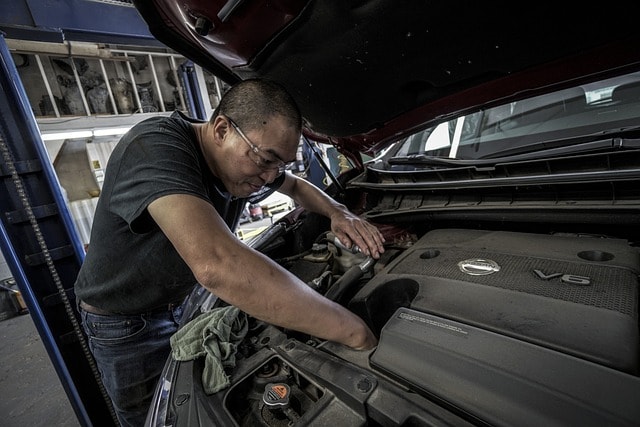
Image by Pixabay.
Community exposure
While a small amount of benzene in the air is common, higher levels of benzene can be dangerous. Higher concentrations of benzene can occur in:
- Gasoline fumes
- Car exhaust
- Factory emissions
- Factory emissions
- Industrial wastewater
- Emissions from burning coal and oil
Some areas are also more likely to have high levels of benzene in the air. These include:
- Auto shops
- Areas with heavy traffic
- Gas stations
- Areas around industrial plants
Cigarette smoke, including secondhand smoke, also poses major risks of Benzene exposure. According to the American Cancer Society, about 50% of benzene exposure in the U.S. is caused by smoking.
Benzene may also be present in contaminated drinking water or food. The chemical is usually only present in low levels, but proximity to an industrial plant, contaminated wastewater, or other issues may lead to higher levels of exposure.
Products containing benzene
Benzene is present in a wide variety of industrial products, including:
- Glues and adhesives
- Cleaning products
- Paint strippers
- Asphalt
- Charcoal
- Contact cements
- Gasoline
- Hydraulic fluid
- Inks
- Mineral spirits
- Paints and coatings
- Pesticides
Consequences of benzene exposure
Benzene harms the body by acting on the blood and bone marrow, the internal part of the bone where new blood cells are made. This can lead to anemia, low white blood cell count, low blood platelet count, and heightened risk of certain diseases and types of cancer.
Evidence shows that benzene is a carcinogen—a substance that causes cancer or helps it grow. The IARC, part of the World Health Organization (WHO), classifies benzene as carcinogenic to humans and identifies a strong link to acute myeloid leukemia (AML). According to IARC studies, benzene also may be linked to acute lymphocytic leukemia (ALL), chronic lymphocytic leukemia (CLL), multiple myeloma, non-Hodgkin’s lymphoma, and other blood-related cancers.
In the U.S., both the National Toxicology Program (an interagency organization that includes the National Institutes for Health and the Centers for Disease Control and Prevention) and the EPA classify benzene as a known human carcinogen. The American Cancer Society also links benzene exposure to a higher risk of cancer and has found that rates of cancer are higher in workers in industries including chemical manufacturing and
oil refining.

Photos © Pixbay / Pexels
Acute myeloid leukemia (AML)
Leukemias, or blood cancers, impact cells that would develop into different types of blood cells. Acute myeloid leukemia (AML) starts in blood and bone marrow cells. From there, it can quickly spread to other parts of the body, including the brain, spinal cord, skin, and gums.
AML develops quickly and needs to be treated as soon as possible. With prompt treatment, 50 to 80% of people diagnosed with AML reach complete remission. In the U.S., an estimated 22,000 people will be diagnosed with acute myeloid leukemia in 2025.
Myelodysplastic syndrome (MDS)
Myelodysplastic syndrome (MDS) refers to a group of cancers that affect blood stem cells. These cancers prevent stem cells from growing into healthy blood cells, leading to conditions including anemia and bleeding that won’t stop. MDS can also develop into acute myeloid leukemia.
MDS is rare, with an estimated 10,000 to 20,000 people diagnosed in the U.S. every year. While there are various treatments for MDS, the only cure is a stem cell transplant, which may not possible for many people. Without treatment, MDS can be life-threatening.
Non-Hodgkin’s lymphoma (NHL), multiple myeloma (MM), and other leukemias
Some evidence also links benzene exposure to other types of cancer, including:
- Chronic lymphocytic leukemia (CLL), a blood and bone marrow cancer. CLL affects lymphocytes, a group of white blood cells that fight infection.
- Multiple myeloma (MM), a cancer that forms in a type of white blood cell called a plasma cell. Cancer cells in bone marrow can crowd out healthy blood cells and lead to complications.
- Other blood-related cancers. Researchers are examining the link between benzene and many different kinds of cancers. However, there is currently less evidence linking benzene to other cancer types.
Plaintiff & Defendant
Plaintiffs bring benzene exposure lawsuits
As information continues to emerge about the dangers of benzene exposure, workers across the U.S. are filing toxic exposure lawsuits. These litigations allege that the plaintiffs were exposed to benzene that was manufactured, processed, supplied, or sold by defendants. Our firm works with these plaintiffs to build strong cases that their exposure to benzene caused their cancer diagnoses.
Who are the defendants in a benzene lawsuit?
Defendants in a benzene exposure lawsuit may include:
- Industrial employers
- Benzene manufacturers
- Premises owners
- Benzene suppliers and distributors
How long do I have to file a lawsuit for benzene exposure?
Your lawsuit timeline depends on the statute of limitations, or how long after an exposure or diagnosis you are allowed to file a suit. The statute of limitations is often two years, but it can be affected by factors including when the harm was discovered and where the case was filed.
Our team will assess your circumstances to make sure that your case is filed before the deadline. The legal process can be complicated, but we will make sure that your legal rights are upheld.

Photos © Pixbay / Pexels
Landscape
State and federal benzene regulations
Exposure to benzene has decreased since the 1980s, largely due to regulation efforts from state and federal organizations. These include:
- The Occupational Safety & Health Administration (OSHA). OSHA is responsible for workplace health and safety regulations. It limits the amount of benzene in the air at a workplace to one part per million (ppm) over a full workday and a maximum of 5 ppm over a 15-minute period. OSHA also requires employers to provide respirators or other personal protective equipment if their employees are dealing with higher concentrations of benzene.
- The Environmental Protection Agency (EPA) oversees a system of regulations designed to protect humans and the environment from hazards. Among other restrictions, the EPA limits the benzene content in gasoline to a maximum of 1.3% and a yearly average of 0.62%.
- The Consumer Product Safety Commission (CPSC) is an independent agency that researches and develops standards for safe products. If any product contains more than 5% benzene by weight, CPSC regulations state that its packaging must note the potential hazard.
Manufacturers, employers, and other businesses are responsible for ensuring compliance with these laws and protecting their employees. If they fail to keep their workers safe, they may be held legally responsible for harm suffered as a result.

Image by Pixabay.
Timeline
November 2025
Benzene litigations continue to gain momentum across the country.
Benzene litigations are gaining momentum across the country as awareness of the hazards of exposure grows. While these lawsuits are not currently consolidated in a multidistrict litigation (a way of grouping many lawsuits against the same defendants), the number of cases filed continues to rise across multiple state courts. Last month, a case filed in the Eastern District of North Carolina alleged that the operators of a chemical plant failed to implement adequate safety measures or warn their employees about the dangers of benzene, and we anticipate that similar cases will be filed in the coming months.
2021
U.S. National Toxicology Program classifies benzene as a carcinogen.
The U.S. National Toxicology Program classifies benzene as a chemical “known to be a human carcinogen.”
2018
IARC confirms benzene is a carcinogen.
The International Agency for Research on Cancer (IARC) Working Group confirms benzene as a carcinogen and highlights the risks of occupational and environmental exposure.
1992
EPA classifies benzene as a carcinogen regardless of route of absorption.
The Environmental Protection Agency (EPA) classifies benzene as human carcinogen regardless of how it’s absorbed into the body.
1986
EPA classifies benzene as a human carcinogen.
The EPA Risk Assessment Guidelines of 1986 classify benzene as a known human carcinogen.
1979
The IARC classifies benzene as carcinogenic to humans. Benzene is placed in Group 1, the agency’s highest classification.
1960s-1970s
Studies conducted on workers from around the world find that benzene is associated with higher risks of cancer and other diseases.
1948-1825
Studies conducted on workers from around the world find that benzene is associated with higher risks of cancer and other diseases.
1948 — A toxicological review for the American Petroleum Institute reports that “the only absolutely safe concentration for benzene is zero.”
1943 — In a report on benzene conducted for Shell Development Company, a researcher from the University of California Medical School writes, “Any exposure at all is dangerous particularly if this exposure is prolonged.”
1939 — Researchers report cases of poisoning and leukemia in workers exposed to benzene.
1926 — A survey of workers at 12 plants that used benzene found that 32% of workers were suffering from abnormally low white blood cell counts.
1825 — English chemist and physicist Michael Faraday first isolated benzene while producing “portable gas.”