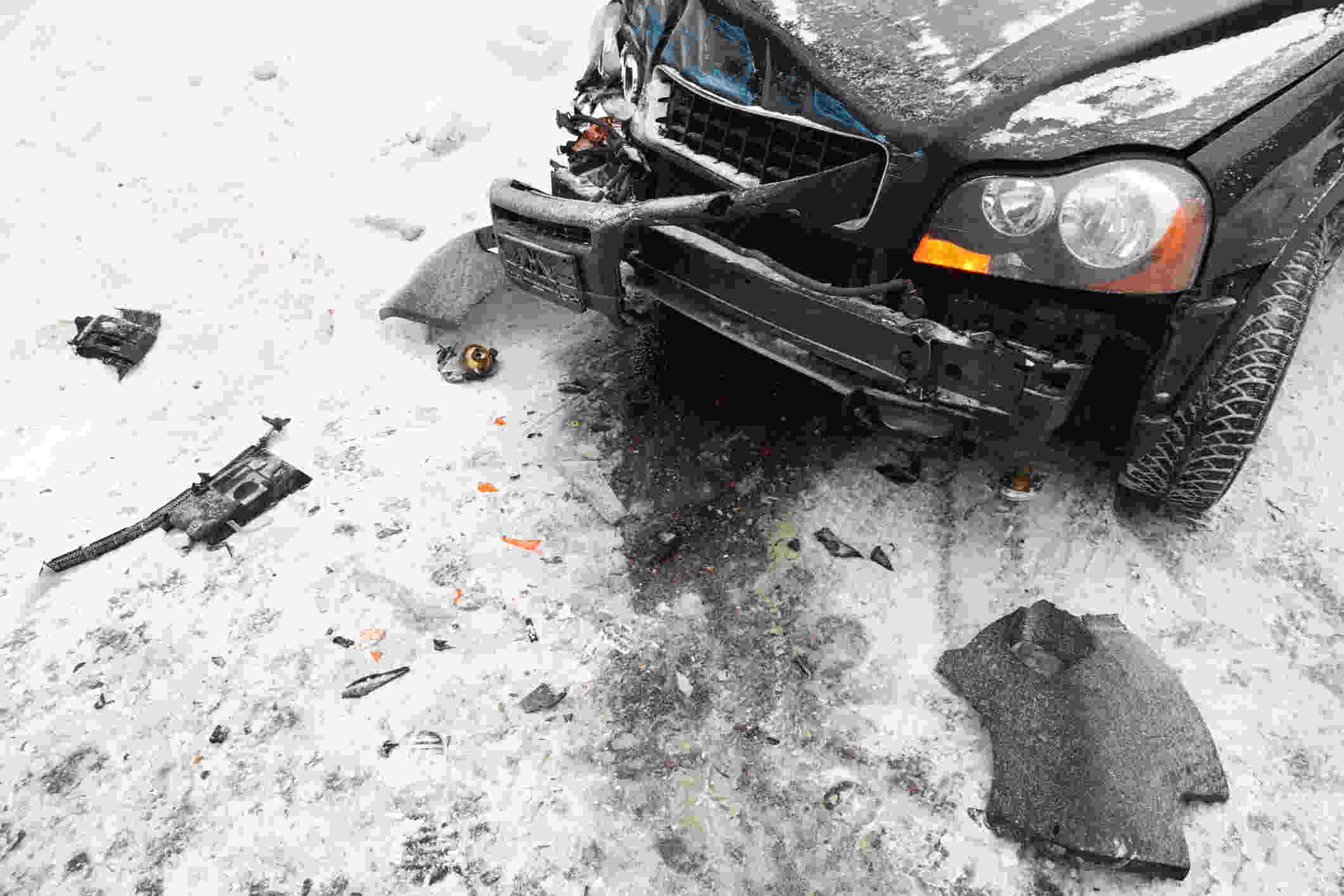

Black Ice Car Accidents – How Weather Complicates Negligence in Illinois Lawsuits
Reviewed by Nicholas P. Kelly, Esq.
Black ice is one of the most dangerous winter road hazards in Illinois. It forms when moisture freezes into a thin, nearly invisible layer of ice on pavement. Drivers often do not realize its presence until their vehicle begins to slide.
When a crash occurs on black ice, insurance companies may cite weather to suggest that no one is truly at fault. However, Illinois law does not automatically excuse unsafe driving simply because conditions are hazardous.
In Illinois, fault is based on how drivers behave in light of road conditions. This can make proving negligence more complicated, but not impossible.

Why black ice is especially hazardous
Black ice blends into the road surface. It is difficult to see even in daylight. It is even harder to detect at night or in the early morning.
Black ice may form when:
- Temperatures hover around freezing.
- Snow melts during the day and refreezes overnight.
- Bridges and overpasses freeze before surrounding roads.
- Shaded areas receive little sunlight.
Because black ice forms silently and invisibly, drivers may lose control with little warning.
What negligence means in an Illinois car accident case
Negligence is a legal term that refers to a failure to use reasonable care. In a car accident case, it generally means a driver did not act as carefully as a reasonably cautious driver would under similar circumstances.
To establish negligence, an injured person typically must prove:
- Duty of care. The driver had a legal obligation to drive safely.
- Breach of duty. The driver failed to meet that obligation.
- The unsafe conduct contributed to the crash.
- The injured person suffered losses as a result of the crash.
Damages refer to the losses caused by an injury. These may include medical expenses, lost income, pain, and the injury’s impact on daily life.
How weather complicates negligence analysis
Weather adds an extra layer of complexity to fault determinations. Insurance companies may argue that black ice alone caused the crash. However, that argument does not take driver behavior into account.
Illinois drivers are expected to adjust their driving to match conditions.
When roads are icy, reasonable care often includes:
- Driving at reduced speeds.
- Increasing following distance.
- Avoiding sudden braking or sharp turns.
- Remaining alert for changing road conditions.
If a driver was traveling too fast for conditions or following too closely, black ice may not have been the sole cause of the crash.
Multi-vehicle black ice collisions
Black ice often contributes to chain-reaction crashes. One vehicle starts to slide on the ice, and other vehicles collide as they try to stop.
In multi-vehicle crashes, more than one party may share fault. Illinois follows a modified comparative fault system. This means multiple parties can be assigned percentages of responsibility.
An injured person may still pursue compensation if they are found to be less than 50 percent at fault. Any financial compensation may be reduced based on their percentage of responsibility.
Evidence that may help establish fault
Because black ice is difficult to see, gathering evidence becomes especially important.
Helpful evidence may include:
- Police crash reports.
- Photographs or video of the scene.
- Weather and road condition records.
- Witness statements.
- Vehicle damage patterns.
This information can help determine how vehicles were moving and whether drivers adjusted to weather conditions.
Why insurers may dispute black ice claims
Insurance companies often scrutinize winter crashes closely.
They may argue that:
- The crash was unavoidable.
- No driver acted unreasonably.
- The injured person was partially responsible.
These arguments may be used to limit or deny claims. A careful review of the facts is often necessary.
How injuries from black ice crashes can affect vehicle occupants
Black ice crashes frequently involve loss of control at speed.
This can lead to serious harm, including:
- Head injuries.
- Back and neck injuries.
- Broken bones.
- Soft tissue injuries.
Some injuries may require surgery, rehabilitation, or long-term care. Others may affect a person’s ability to work or perform daily tasks.
How our Chicago personal injury lawyers can help
Black ice cases require careful investigation. The lawyers at Wallace Miller review police reports, gather evidence, and evaluate the interaction between driver behavior and road conditions.
We help injured people understand how negligence is analyzed under Illinois law and what legal options may be available to them.
If you were injured in a black ice car accident in Chicago or elsewhere in Illinois, you may want to speak with our personal injury attorneys about your legal options. Contact Wallace Miller at 331-425-8022 or submit our online case evaluation to discuss your situation with a member of our team.