

The Role of Distracted Driving in Chicago Car Accidents: What Victims Need to Prove
Reviewed by Nicholas P. Kelly, Esq.
Chicago’s congested streets and fast-paced traffic make every driver’s attention critical. Yet distracted driving remains one of the most common causes of serious crashes across the city. From texting at stoplights to adjusting navigation apps while in motion, even a brief distraction can lead to devastating consequences.
At Wallace Miller, our Illinois car accident attorneys represent victims who have suffered severe injuries due to another driver’s inattention. Proving that a driver was distracted can be challenging. Still, with the proper evidence and a clear understanding of Illinois law, victims can hold negligent drivers accountable and recover the compensation they deserve.
Understanding what qualifies as distracted driving
Distracted driving refers to any behavior that diverts a driver’s attention away from the task of safely operating a vehicle.
The National Highway Traffic Safety Administration (NHTSA) identifies three main types of distraction:
- Visual distractions:Taking your eyes off the road.
- Manual distractions:Taking your hands off the wheel.
- Cognitive distractions:Taking your mind off driving.
Common examples of distracted driving in Chicago include:
- Texting or using a cell phone.
- Adjusting a GPS or radio.
- Eating, drinking, or applying makeup.
- Talking to passengers or handling pets in the vehicle.
- Reaching for items inside the car.
Illinois law prohibits drivers from using handheld electronic devices while driving, including texting, emailing, or browsing the internet. Violating this statute is not only illegal, but it can also serve as strong evidence of negligence in a personal injury claim.
How distraction leads to catastrophic crashes
Chicago’s mix of highways, intersections, and pedestrian-heavy areas creates countless situations where a few seconds of distraction can cause serious harm. A driver glancing at their phone for just five seconds while traveling at 45 miles per hour covers the length of a football field without looking at the road.
Distracted drivers often cause:
- Rear-end collisions at traffic lights.
- Side-impact crashes at intersections.
- Pedestrian and bicyclist injuries in crosswalks.
- High-speed wrecks on expressways like I-90 and I-94.
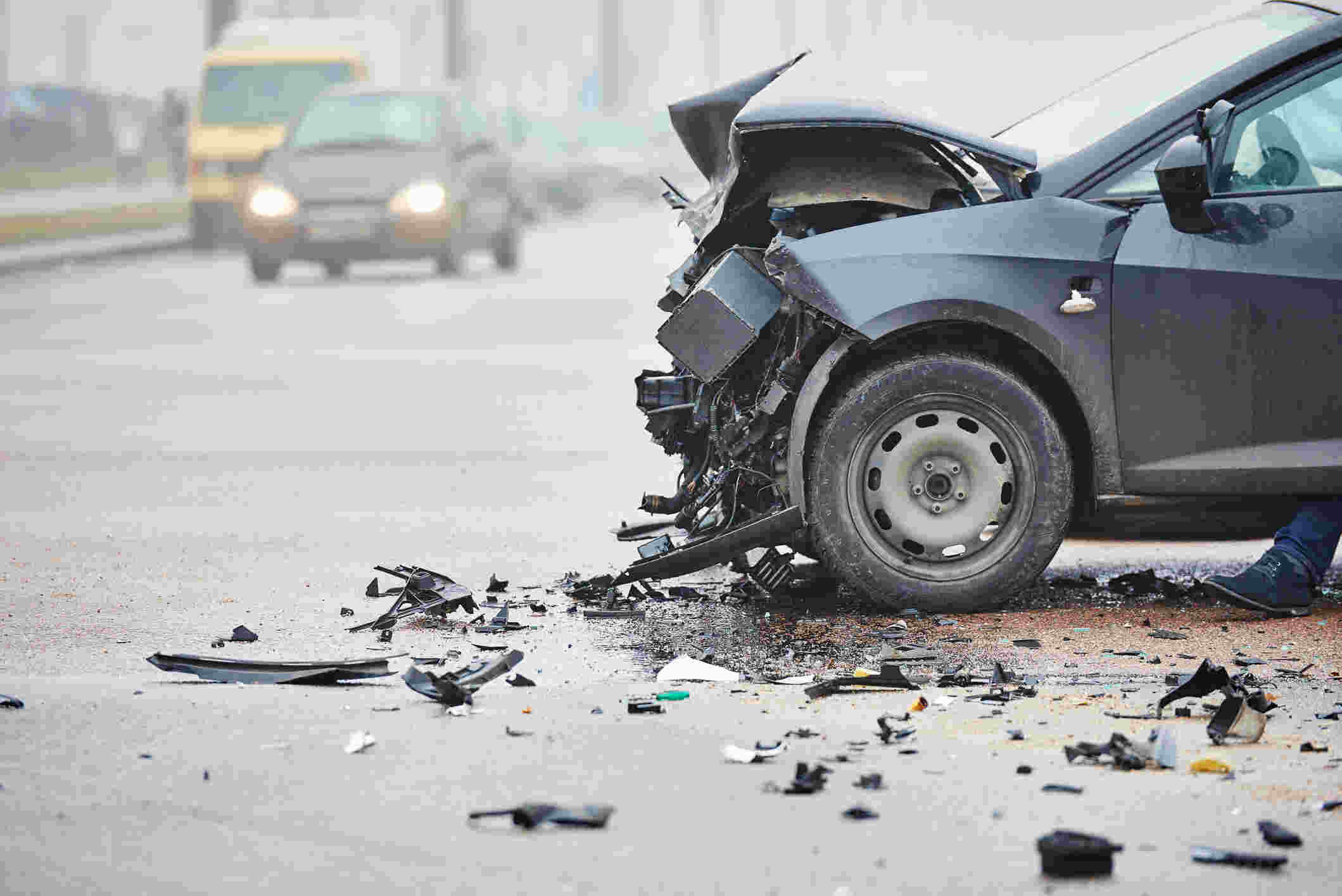
When these crashes occur, victims may suffer life-altering injuries, including broken bones, spinal cord damage, or traumatic brain injuries. In many cases, proving distraction is key to obtaining justice.
What victims must prove in a distracted driving case
To recover compensation after a distracted-driving crash, victims must establish negligence, the legal foundation of most personal injury claims.
Proving negligence requires showing four key elements:
- Duty of care: The at-fault driver had a legal obligation to operate their vehicle safely and follow traffic laws.
- Breach of duty: The driver failed to uphold that obligation — for example, by texting or looking away from the road.
- Causation: The distraction directly caused or contributed to the accident.
- Damages: The victim suffered measurable losses, including medical bills, lost income, and pain and suffering.
Our attorneys can help gather the evidence necessary to prove these elements, ensuring that the driver’s behavior is clearly linked to the crash.
How attorneys uncover evidence of distraction
Because most drivers deny being distracted, proving it often requires strategic investigation and the use of technology. At Wallace Miller, we know how to obtain and preserve evidence that establishes fault.
Common sources of proof include:
- Cell phone records: These can show texts, calls, or app activity at the exact time of the crash.
- Vehicle data: Many modern vehicles store information about speed, braking, and steering in event data recorders (also known as black boxes).
- Surveillance or traffic camera footage: Nearby businesses and city cameras often capture the moments leading up to a collision.
- Witness statements: Bystanders may notice a driver looking down, holding a phone, or failing to respond to traffic signals.
- Police reports: Officers frequently document observations or issue citations for distracted driving.
By combining these sources, attorneys can build a strong, fact-based case demonstrating that distraction caused the collision.
Why legal representation matters after a distracted driving crash
Insurance companies often downplay the role of distraction, arguing that accidents happened too quickly to assign fault or that victims were partially responsible. Without experienced representation, substantial evidence can be lost or overlooked.
At Wallace Miller, our attorneys act quickly to investigate distracted driving crashes across Chicago and throughout Illinois. We gather critical records, work with accident reconstruction experts, and ensure that insurers and defense attorneys cannot minimize your claim.
If a distracted driver injured you or someone you love, you deserve to be heard and compensated. Contact the Chicago car accident attorneys at Wallace Miller at 331-425-8022 or complete our online form for a free consultation. We’ll review your case, explain your options, and pursue full justice for your injuries and losses.